
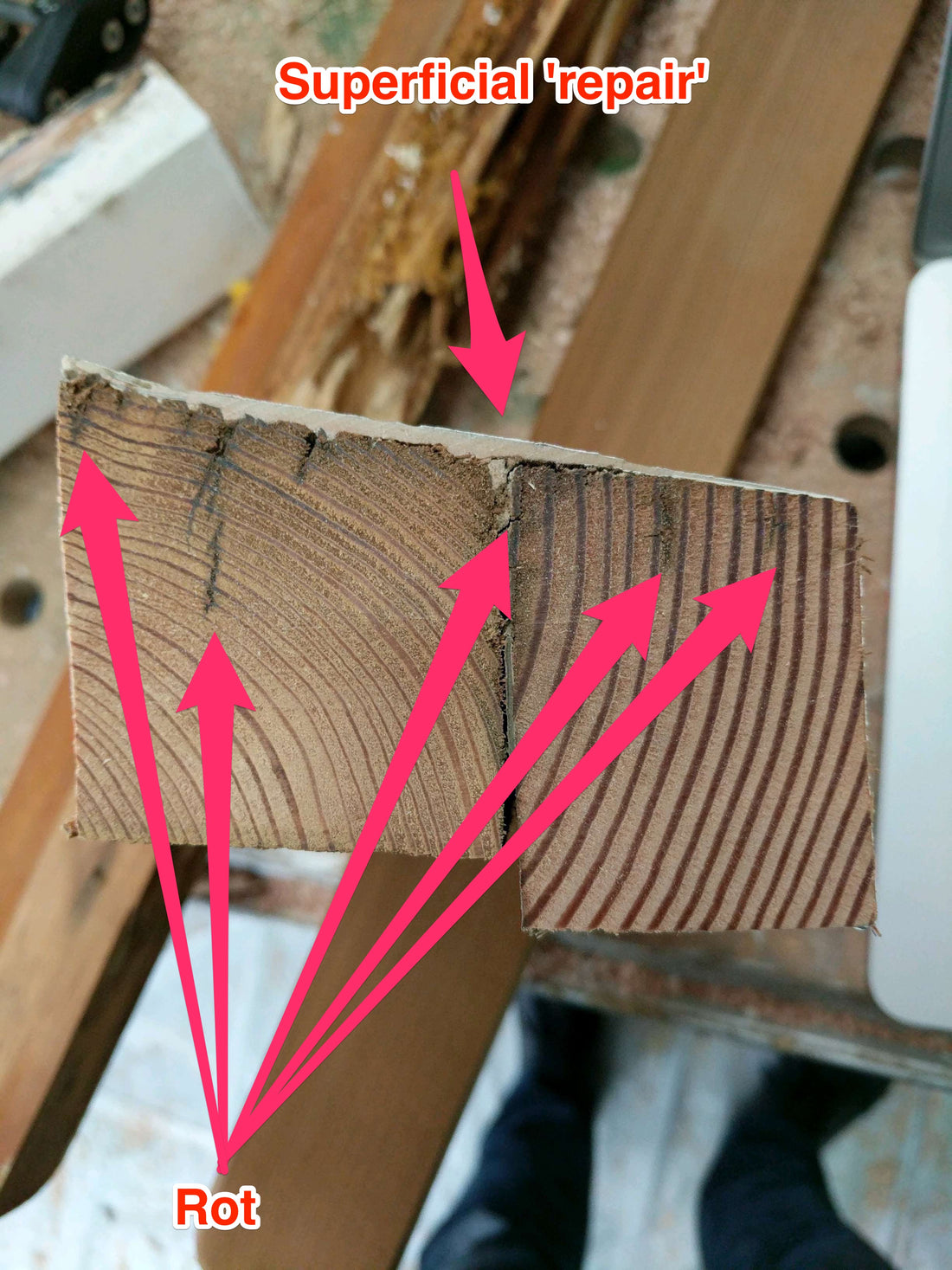
How to fix wood rot in a timber window
A soft patch on a window sill sends plenty of people straight to a quote for replacement windows. Most of them do not need one. Rot is repairable, and a frame that has already stood for eighty or a hundred years is almost always worth keeping. The timber in it came off slow-grown trees and was seasoned properly, which is more than you can say for most of what a yard sells today. Deal with the rot the right way and the repaired section will usually outlast the wood around it.
Find the edge of the rot
Push a screwdriver into the soft area. Sound timber pushes back. Rotten timber gives way like cork, and you feel the difference immediately. Keep probing outwards until you hit resistance on every side. That line is where your repair has to reach.
Rot is a fungus, so anything you leave behind carries on eating. Being generous at this stage is what stops you doing the whole job again in three years.
Cut back to sound timber
A multi-tool is the best thing for this. It cuts quickly, gets into awkward corners, and lets you follow the shape of the damage instead of chopping out a square hole and losing good timber with it. Take out everything soft plus a few millimetres of sound wood around it, then stop and let the area dry out properly.
While you wait, work out where the water was getting in. Failed glazing, cracked paint, a blocked drip groove under the sill, a sill that no longer sheds water the way it was cut to. Fixing the timber without fixing the cause just resets the clock.
Harden the edges before you fill
The timber right at the boundary of a repair is often halfway gone. Not rotten enough to cut out, not sound enough to trust. Epoxy Wood Stabiliser soaks into the grain and crystallises there, which stiffens those fibres and isolates any trace of fungus you could not reach. It also gives your filler something solid to key into. Brush it on or pour it into the end grain and let it soak in.
Skip this step and the filler tends to let go at the edges later, which is where most epoxy repairs fail.
Fill with two-part epoxy, not bog
This is where window repairs usually go wrong. Pink polyester body filler is cheap, easy and everywhere, and it fails. It moves at a different rate to timber through heat and cold, so it cracks at the join, and then water sits behind it where you cannot see it. We wrote about what that looks like a few years down the track in Beware of "Patch & Paint".
Two-part epoxy bonds into the wood, cures waterproof, does not shrink, and takes a chisel, a plane, a drill and a paintbrush much the same way timber does. DT Wood Repair Epoxy with the one hour cure suits most window work and keeps you moving through the afternoon. The four hour version gives you longer to shape a big or fiddly fill before it goes off. Either way, build it slightly proud of the surface so you have material to work back to.
If you are doing more than a window or two, a Heavy Duty Epoxy Gun dispenses the cartridges evenly and turns the messiest part of the job into the quickest.
Shape, prime, paint
Once it has cured, bring the fill back to the original profile with a chisel, then abrasive paper. Prime with a solvent-based primer sealer and get your top coats on as soon as you reasonably can. A good epoxy repair disappears under paint, and the paint is what keeps the next lot of moisture out of the timber around it.
One warning before you start sanding. Almost any Australian window painted before the late 1970s has lead paint somewhere in the layers, and scraping or sanding it makes dust you do not want in the house. The federal six step guide to painting your home is worth ten minutes before you pick up a scraper.
With the frame sound again, this is the moment to reglaze any pane whose putty has gone and to fit draught seals while the sashes are out of the frame anyway. Three jobs at one window in a weekend, and you will not be back at it for years.
FAQ
Can you repair rotten wood instead of replacing it? Yes, as long as the rot has not eaten the structural core of the piece. Cut out the soft timber, harden the edges, and fill with a two-part epoxy. The finished repair is stronger than the wood around it.
What is the best filler for a rotten window frame? A two-part epoxy, not a polyester body filler. Epoxy bonds into the timber, cures waterproof and moves with the wood instead of cracking away from it.
Should I treat the wood before filling it? Yes. An epoxy wood stabiliser hardens the weakened fibres at the edge of the cut-out and traps any fungus you could not reach with a chisel.
How long does an epoxy window repair last? Done properly, decades. Epoxy does not rot and does not absorb water, so the repaired section normally outlives the original timber beside it.
What you need for this job
Everything here ships Australia-wide from Hobart and Victoria.
- Epoxy Wood Stabiliser (225ml). Use it first. Hardens the punky timber at the edge of the repair so the filler has something to hold on to.
- DT Wood Repair Epoxy, 1 hour cure. The workhorse fill for window frames, sills and sash joints. Our biggest seller, and it is bought mostly by people buying it a second time.
- DT Wood Repair Epoxy & Filler, 4 hour cure. Same repair, longer working time. Pick this one for large fills or detailed mouldings.
- Heavy Duty Epoxy Gun. Worth it from the second window onwards.
Not sure how much you need for the window in front of you? Get in touch through the site with a photo and we will tell you.